Saprea
Saprea is an international non-profit organization dedicated to preventing child sexual abuse and supporting survivors.
During my time there, I worked as the lead UX/UI designer for the organization’s digital products within a multidisciplinary creative team.
The organization relied heavily on digital platforms to deliver educational content, support programs, and resources for survivors and families.
Project Key Points:
Problem
- The existing digital ecosystem lacked coherence and usability.
Multiple platforms had grown independently, resulting in fragmented user journeys and inconsistent interfaces. - Users often struggled to navigate between educational resources, support programs, and informational content.
- At the same time, the organization was undergoing a major brand evolution that needed to be translated into all digital products.
Constraints
- Sensitive subject matter requiring careful design decisions
- Diverse audiences (survivors, families, educators, professionals)
- Limited technical resources
- Legacy platforms and existing content structures
Approach
I worked closely with the creative team, content specialists, and internal stakeholders to redesign key digital experiences.
Particular attention was given to clarity, accessibility, and emotional safety in the interface design.
Process
- stakeholder workshops to clarify priorities
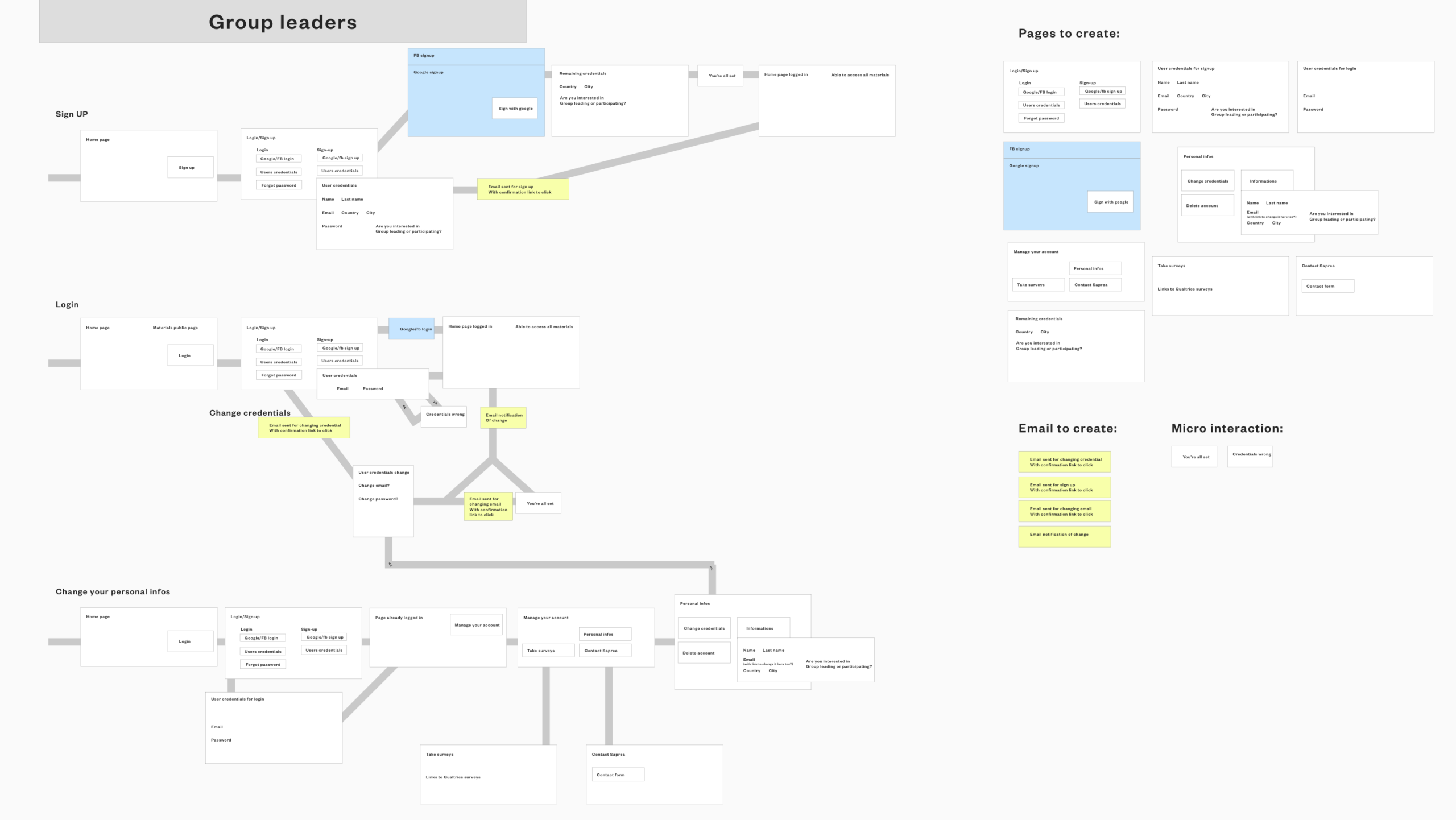
- mapping user journeys across platforms
- simplifying information architecture
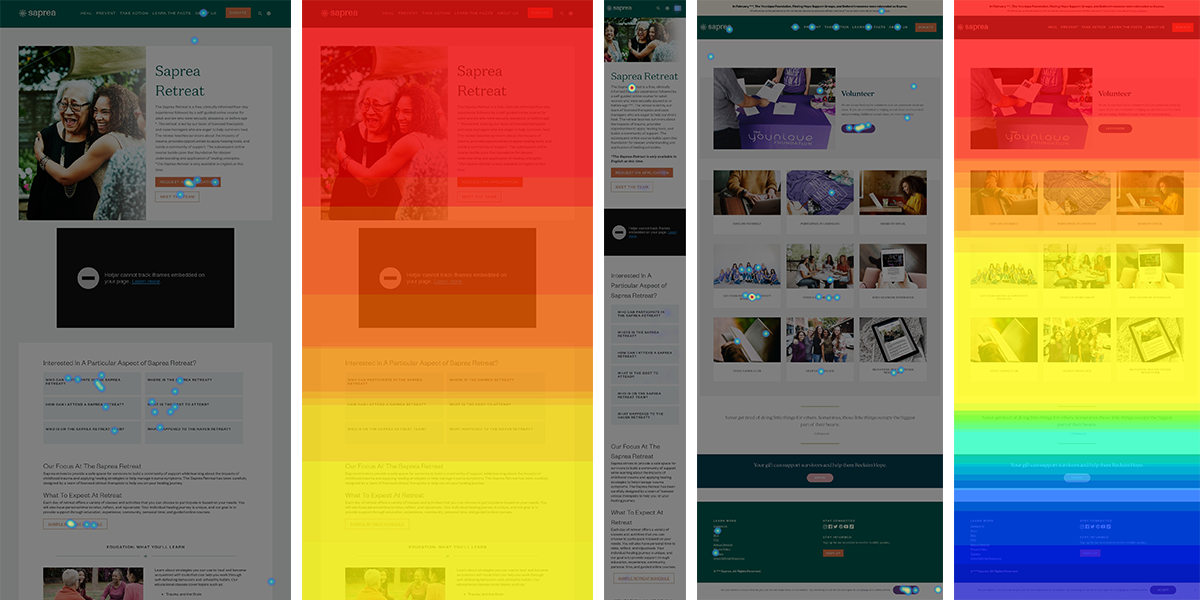
- iterative interface design and prototyping
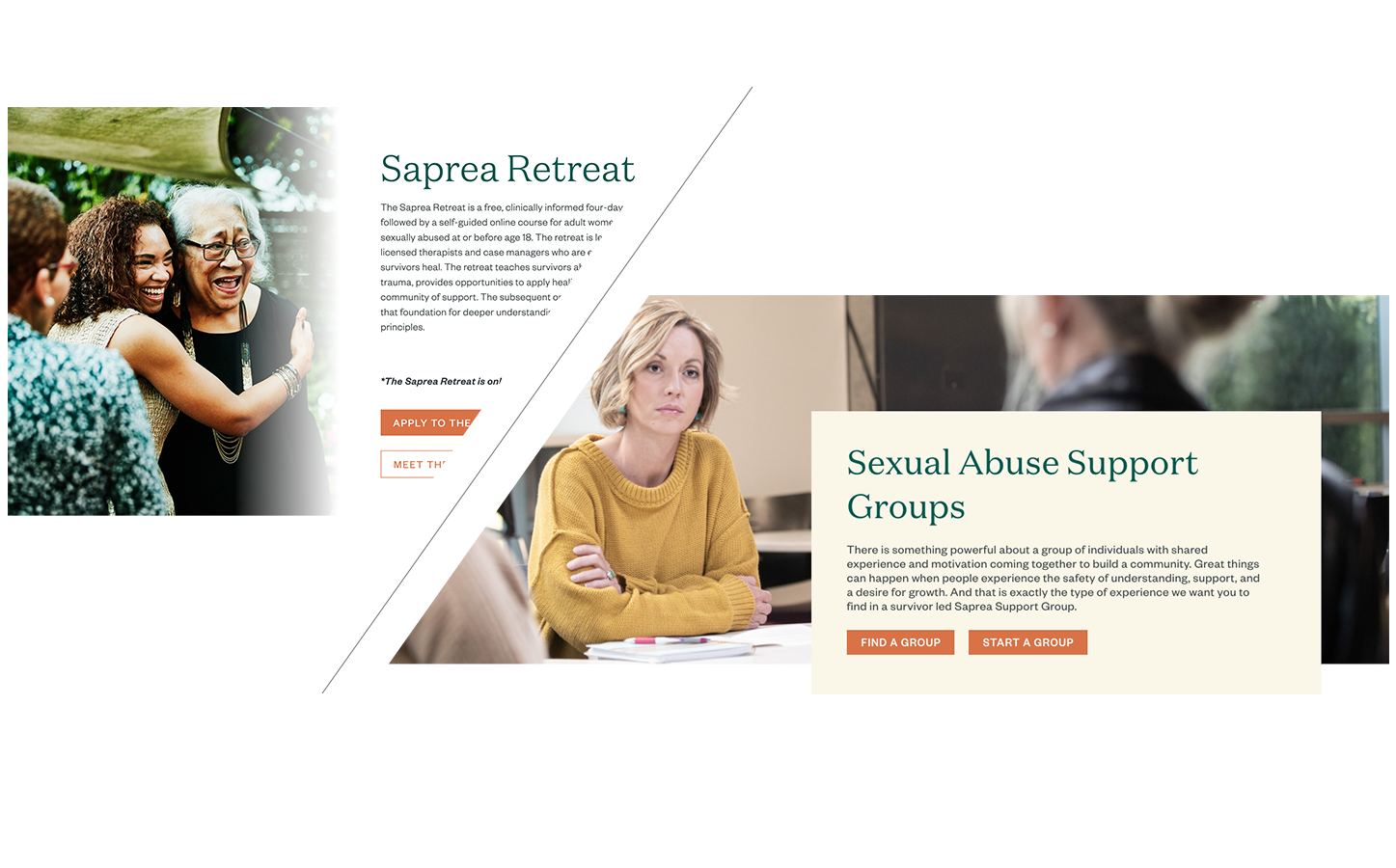
Design Decisions
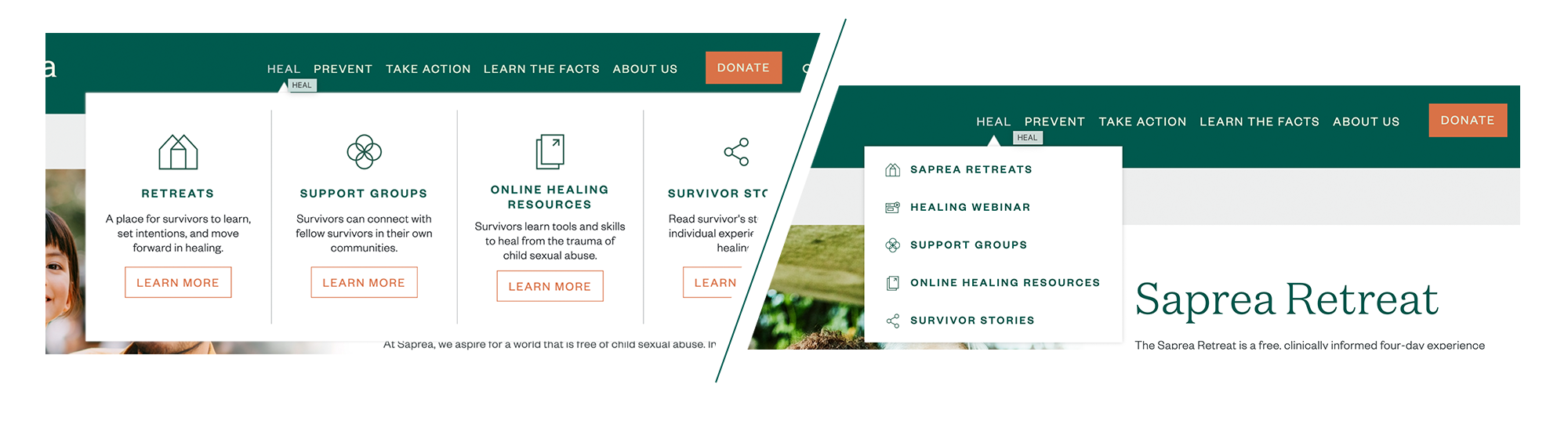
- restructuring navigation to reflect real user needs
- creating consistent interaction patterns across platforms
- designing clear pathways between educational and support resources
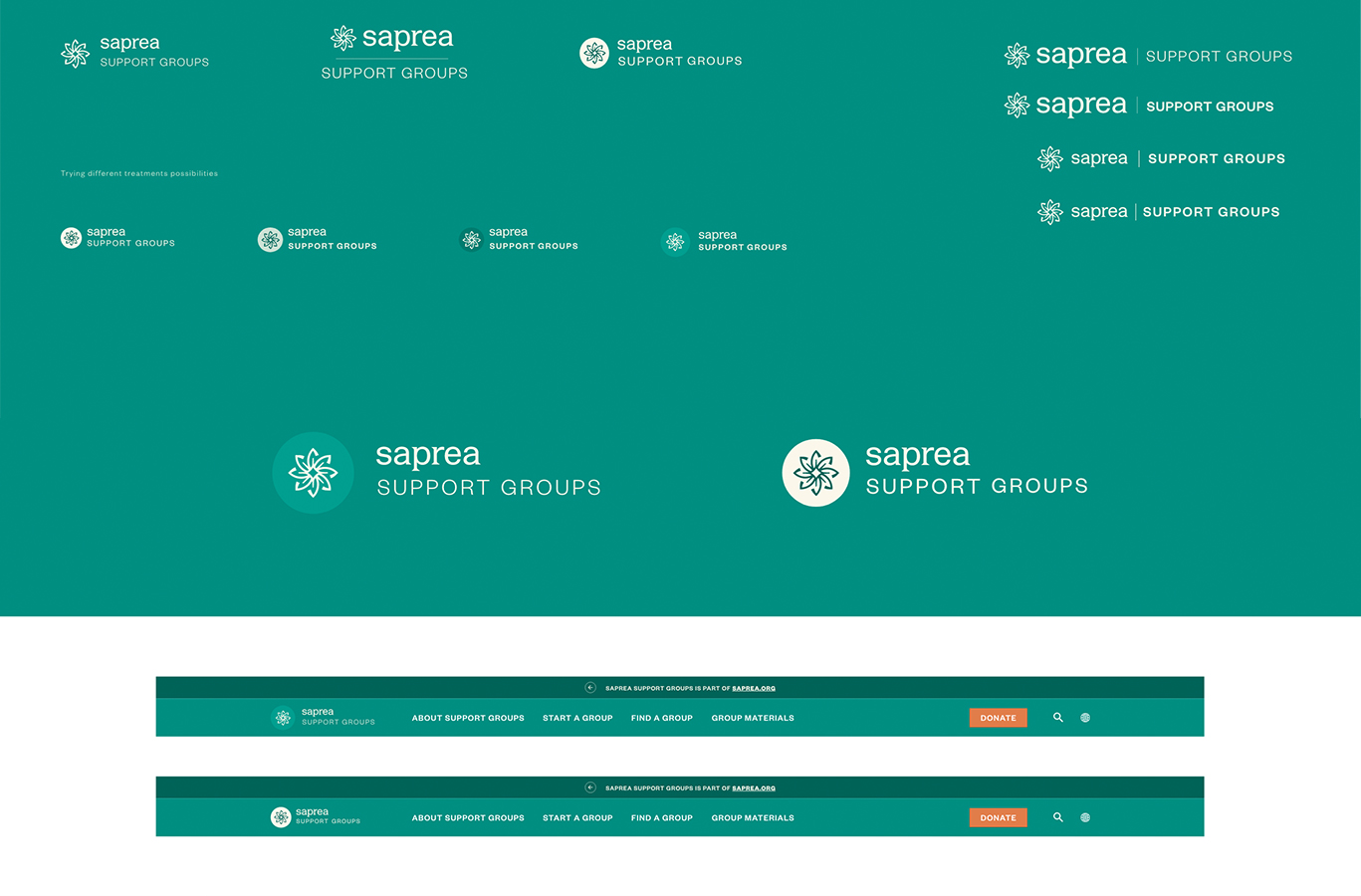
- translating the new brand identity into usable digital components
I also introduced more structured UX thinking within the team to support more user-centered decision making.
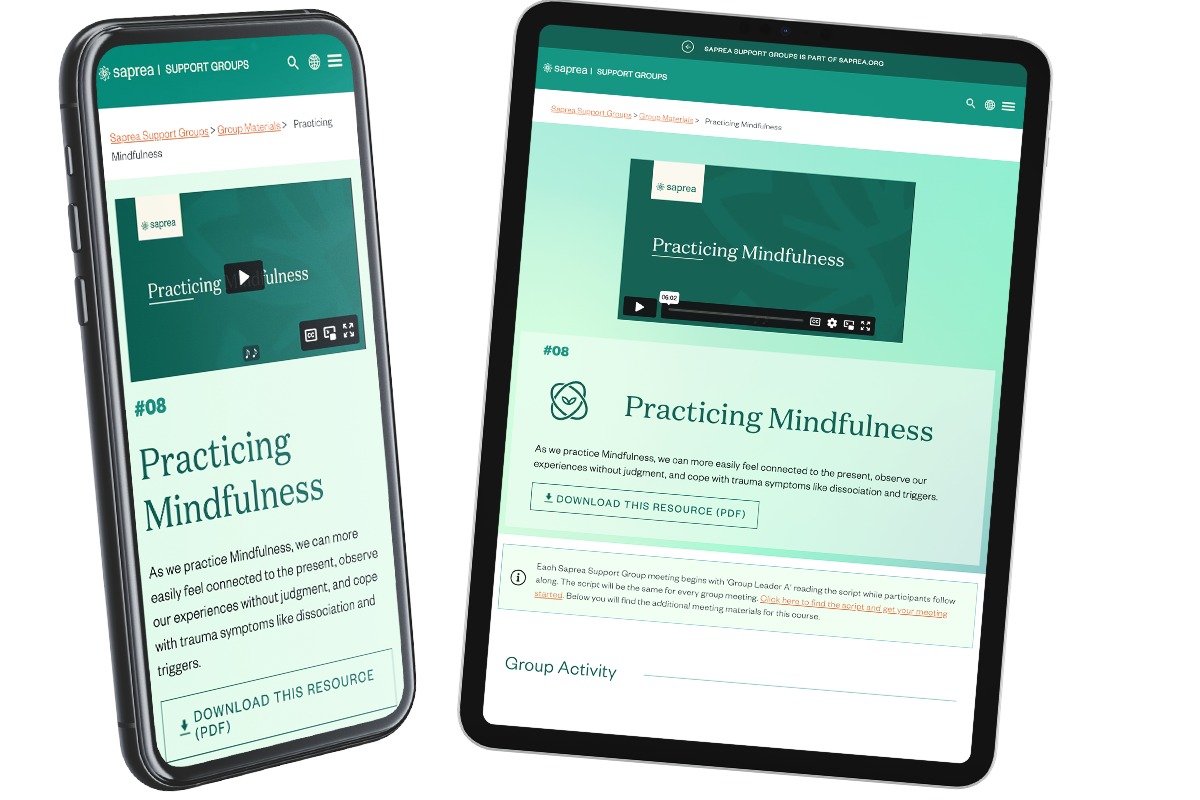
Outcome
The redesign helped create a more coherent digital ecosystem for the organization.
The platforms became easier to navigate, better aligned with Saprea’s mission, and more consistent visually and structurally.
The work also helped establish stronger UX practices within the organization.
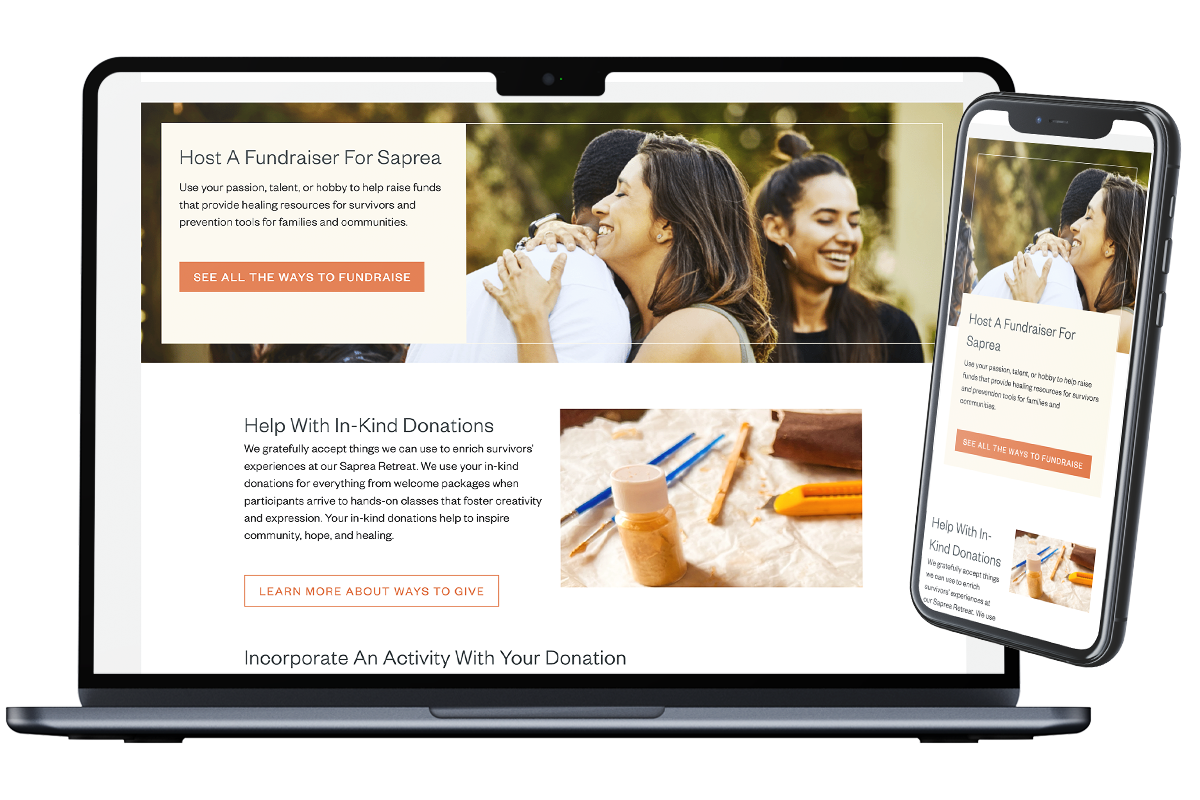
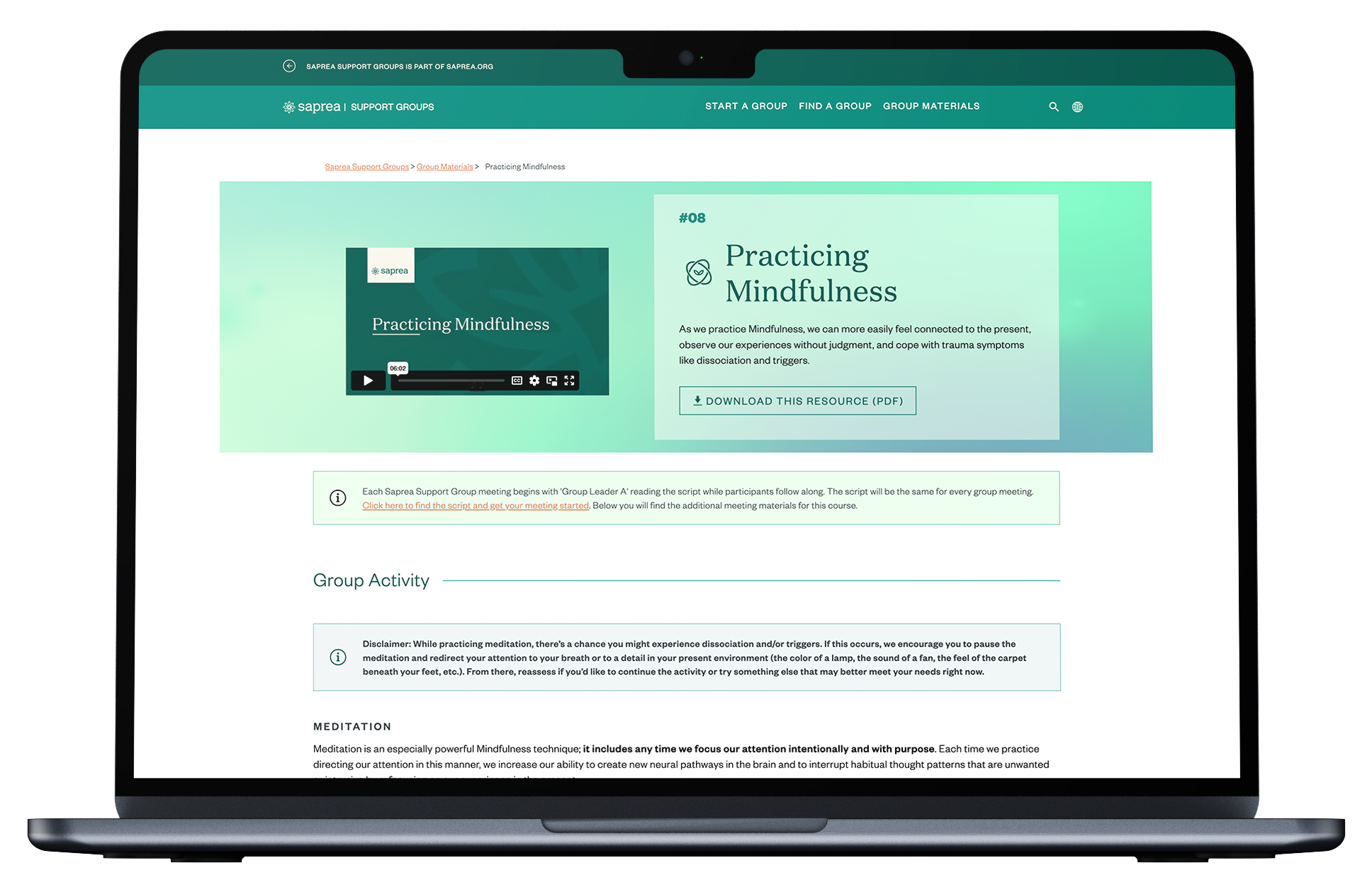
Some case studies I've done during my journey