Bivouac
Project Evolution
More recently, the project moved beyond its initial proof-of-concept stage. What first served mainly to explore principles, positioning, and information flows gradually became a way to test the product’s value more directly.
This shift reflects a broader change in design practice: a proof of concept is no longer only about validating technical feasibility, but increasingly about reducing uncertainty earlier, challenging assumptions, and structuring product decisions before full engineering involvement.
In Bivouac’s case, tools like Figma Make accelerated that transition. The project was no longer only a reflective exploration, but a form of pre-industrialization work, making it possible to test how the product could realistically behave, be understood, and eventually be built.

Project Key Points:
Problem
Designing a bivouac-related application raises a fundamental contradiction.
Many outdoor products rely on discovery-driven features such as “best spots” or community recommendations to increase engagement. But in this context, that logic can encourage overuse, damage fragile environments, and reinforce a consumer mindset that conflicts with responsible mountain practices.
At the same time, bivouac regulations are often difficult to access. Rules vary across parks, municipalities, and prefectures, and users are frequently left without clear or reliable information.
The challenge was therefore not just to design a useful app, but to define a product that helps people make better decisions without contributing to harmful behavior.
Constraints
- fragmented and highly localized regulations
- need for reliable information in outdoor contexts
- environmental risks linked to overexposure of places
- strong cultural expectations around safety, autonomy, and responsible information sharing in mountain communities
Approach
The project was shaped by both field-informed research and product exploration.
Early work included direct observation of mountain practices and discussions with actors involved in safety and equipment. These conversations helped frame the project around actual user needs, practical constraints, and a specific cultural context where information sharing is closely tied to safety, cooperation, and responsibility.
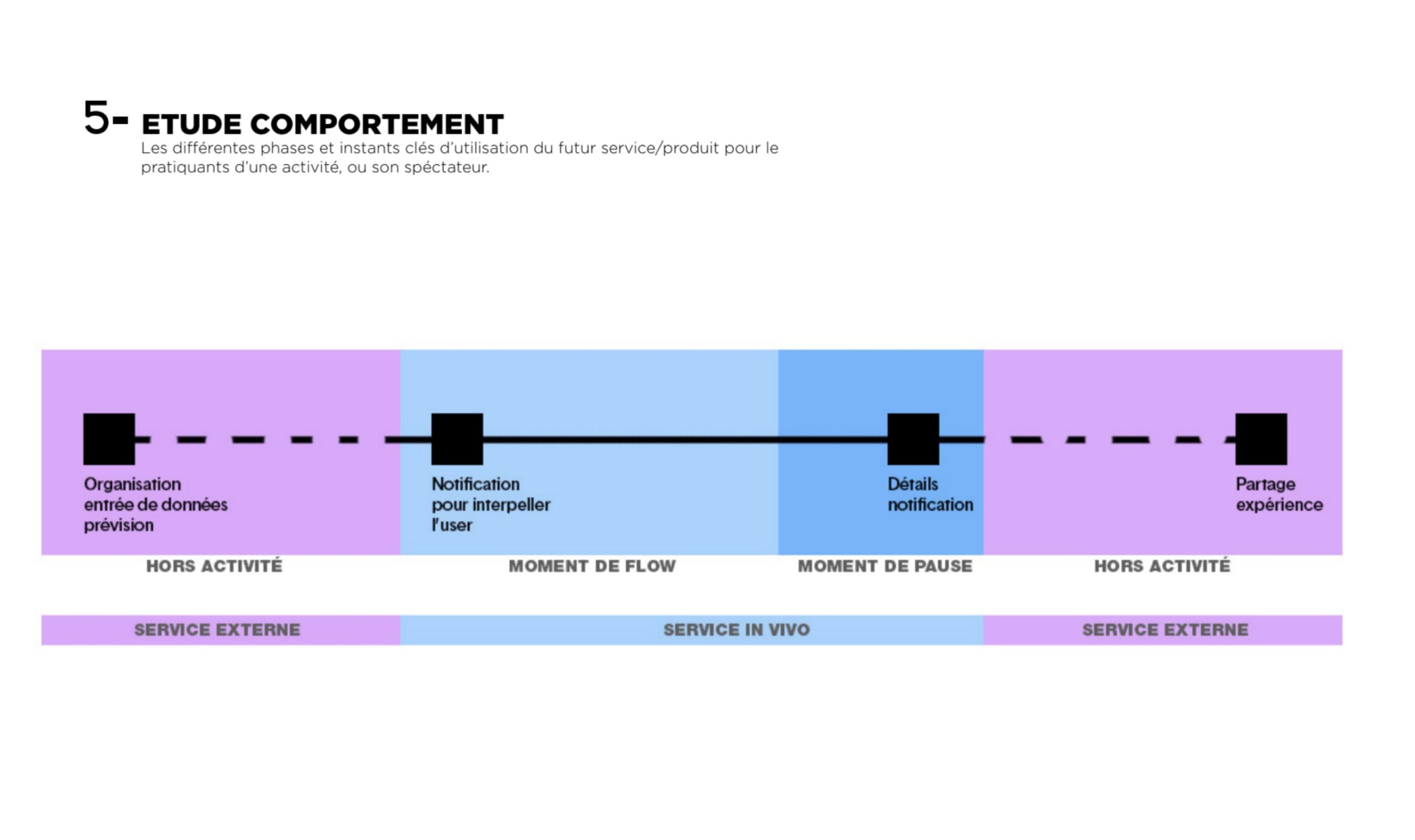
From there, the design process focused on reframing the role of the application: not as a discovery platform, but as a decision-support tool connecting users with official, contextualized information.
Design Decisions
Key decisions included:
- avoiding features based on user-generated “secret spots” or ranking logic
- prioritizing official sources such as parks, municipalities, and prefectures
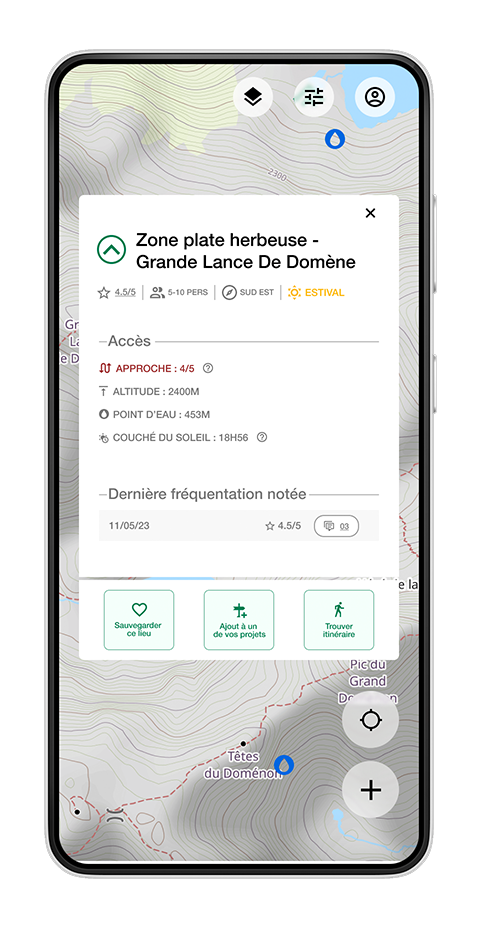
- presenting regulations in a clear, location-based, actionable way
- designing an experience that supports understanding and judgment rather than passive consumption
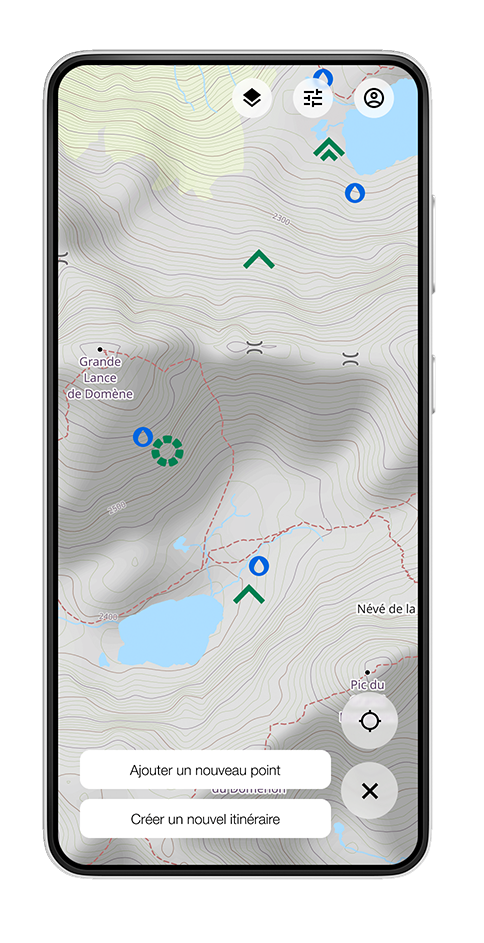
The interface was conceived to reduce ambiguity and help users quickly understand what is allowed, restricted, or prohibited in a given context.
Outcome
The updated prototype shows a more grounded and realistic evolution of the initial concept.
More than a simple outdoor app, Bivouac became an exploration of how UX design can support responsible behavior by making critical information more accessible, while respecting the environmental and cultural specificities of mountain practice.
It also reflects a broader design position: digital products do not only shape access to information, they shape behavior.
Some case studies I've done during my journey